
ABOUT US
Frontier Institute of Technology is for innovators, self-starters, and those who want to shape the future. We see a bold tomorrow that starts right here, with the opportunity to build expertise and expand what education can do.
The mission of Frontier Institute of Technology is to develop, inspire, and empower leaders to effect global and community transformation by delivering accessible, rigorous, and practical distance education in the areas of leadership, management, entrepreneurship, and technology.
Frontier Institute of Technology was founded in 2024 and is a private, non-profit institution accredited by the Distance Education Accrediting Commission. The Distance Education Accrediting Commission (DEAC) is listed by the U.S. Department of Education as a recognized accrediting agency. DEAC is recognized by the Council for Higher Education (CHEA). Frontier Institute of Technology was previously named Elmwood Institute.



At Frontier, we believe traditional universities aren’t keeping pace with the technical skills that industries expect. We believe higher education isn’t preparing students for careers in the real world. We believe people learn best by doing, not by memorizing. We also believe AI is not just a tool. It’s the defining force of a new era of work and human capability.
Frontier Institute of Technology is a private, non-profit university that prepares students to build, lead, and think critically in an era shaped by AI and rapidly advancing technology. Programs combine rigorous academics with team-based projects, AI-native workflows, and venture-driven learning — reflecting how innovation happens in the real world.
Beyond technical skill, Frontier emphasizes ethical judgment, independent thinking, and responsible leadership. As technology becomes more powerful, students must be prepared not only to create it, but to consider its impact on society.
Frontier brings together talented students, faculty, and mentors from diverse backgrounds who share a commitment to innovation, collaboration, and human-centered problem solving.


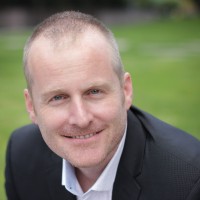
I grew up learning that if the right tool doesn’t exist, you build it. That instinct followed me from ranches in rural America to the Provost’s office – and now to Frontier, where we’re building the institution of higher education designed to meet a technologically and economically transformed world.
I grew up a rancher’s grandson. If the tractor broke and you didn’t have the right tool, you made one. That problem-solving instinct has traveled with me through every role I’ve held – and it’s never been more relevant than right now, building something the world genuinely needs.
As Provost of large institutions, I’ve served 50,000 students across 25 states – navigating the regulatory, accreditation, and innovation terrain that defines what’s actually possible inside a complex institution. That experience gave me a rare fluency in the space where bold ideas meet real-world constraints, and a deep respect for what it takes to move fast without losing credibility.
My work developing new tools for human-computer interaction and co-founding social ventures taught me that the most important breakthroughs happen at the edge – where innovation makes contact with the physical and social systems, laws, and norms that govern what’s possible. I’ve learned to work at that edge, not around it. People sometimes mistake me for a skeptic. I’m not – I’m the optimist who insists that ideas get fully thought through before they get built.
Higher education is engaged in several distinct human projects at once – character formation, technical skill development, professional credentialing, knowledge production, social ritual – but technology is disrupting many of these directly. In a world where too many institutions look and act the same, Frontier knows what it’s for.
We are at a once-in-a-generation moment to build institutions that are more purposeful, move with velocity, and are genuinely structured around the people they serve. That’s Frontier’s mandate – and I can’t imagine a better place to put everything I’ve learned to work.
BUILDING AT FRONTIER
→ Setting the strategic vision and assembling the team that makes Frontier a genuinely new kind of institution
→ Navigating the governance, innovation, regulatory, and accreditation environment where most institutions get stuck
→ Ensuring Frontier moves at the speed the moment requires – without sacrificing depth or durability
◎ Currently obsessed with: what it would look like to meet the global demand for post-secondary education with institutions that are more purposeful, faster, and honest about what they’re actually for.
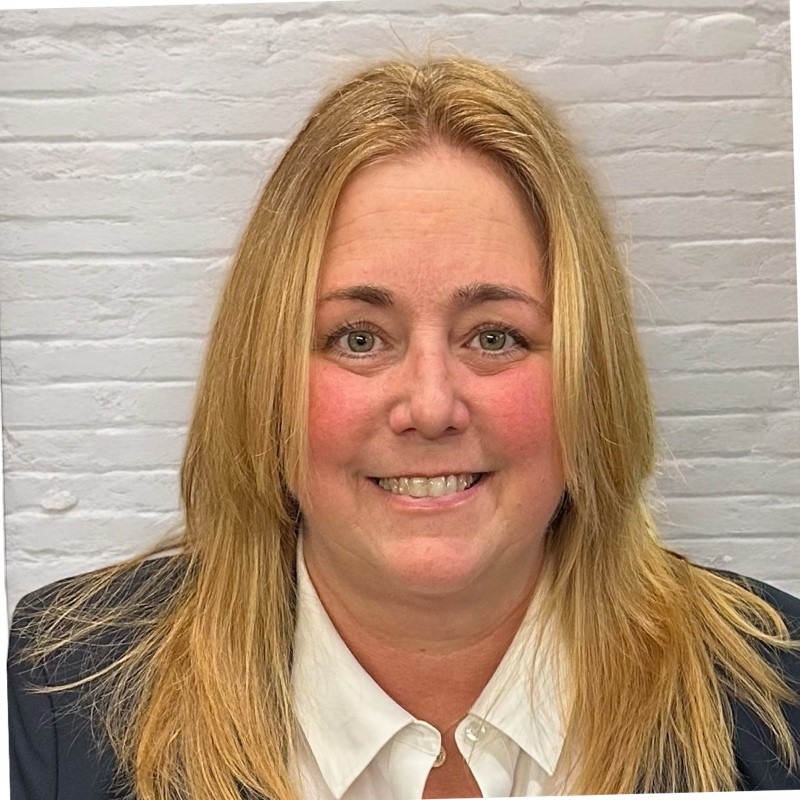
I’ve spent my career building the infrastructure that turns educational promise into real outcomes — supporting hundreds of thousands of learners across global programs and leading the complex accreditation and operational work most people never see. At Frontier, I’m building the systems that make sure every step a learner takes leads somewhere.
I’ve spent my career inside the space between what education promises and what learners actually need to move forward. Not because that space is comfortable — but because closing it is where the most consequential work happens.
Across every role I’ve held, I’ve seen the same pattern: pathways that are harder to navigate than they need to be, progress that’s difficult to carry forward, and investments of time and money that don’t consistently produce meaningful outcomes. The issue was never the learner. It was the failure to build systems genuinely in service of them. That conviction is what I bring to Frontier every day.
I’ve built and led academic programs at scale — supporting hundreds of thousands of learners across global initiatives, navigating complex accreditation and regulatory environments, and launching program models that required both strategic vision and the operational follow-through to deliver. Those experiences gave me the ability to build systems that are not just scalable, but adaptive — capable of evolving without losing rigor.
What I’ve learned is that the most important design question isn’t how a program works in theory — it’s what happens at the seams. Where does momentum stall? Where does a learner do everything right and still hit a wall? Answering those questions honestly is how you build something that truly serves people — and where real, lasting change begins.
My work is often described as operational. But operations are just strategy made tangible. What I’ve been building across every role is the infrastructure that connects what education promises to what learners need to do next.
At Frontier, we have the mandate to build that infrastructure right — from the ground up, with the learner at the center. That’s not just good design. It’s the entire point.
BUILDING AT FRONTIER
→ Building programs and systems where learning is recognized, progress compounds, and the path forward is always clear
→ Designing connected, practical experiences built around growth — not just completion
→ Bridging the gap between academic quality, operational rigor, and real workforce outcomes
◎ Currently obsessed with: the spaces between learning and opportunity — and making sure nothing breaks there.
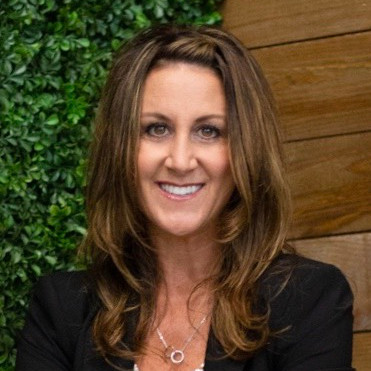
I’ve spent my career at the intersection of brand, growth, and human potential — helping organizations scale impact and deliver on what they promise. At Kaplan, I helped transform how a major university showed up for its students. At ALX, I helped build a movement: scaling to hundreds of thousands of learners and proving that education, designed around real outcomes, becomes a genuine engine of economic mobility. At Frontier, I’m helping reimagine what a talent institution looks like for the world that’s coming.
I’ve spent my career asking one question: what does this person need, and how do we build something that truly delivers for them? That’s what brought me to Frontier, where my role is to grow not for its own sake, but as a measure of impact — every learner we reach, every door we open, every life we change.
Higher education is at an inflection point. AI and emerging technology have created a widening gap between what learners need to thrive and what most institutions were built to provide. That gap is an extraordinary opportunity, and this is the moment to build something new.
Kaplan is where I learned what it truly takes to align a brand with the experience it promises. Leading a full brand transformation, I saw firsthand how the right investment in people — measured against real student outcomes — changes what an institution can deliver.
ALX is where I saw what education looks like when it fully delivers on its promise. Over four years, I helped build and scale a global movement to over 600,000 learners — watching people launch careers, change their trajectory, and create ripples of impact across their communities and beyond. That experience changed how I think about what education can and should do.
My earlier years at Disney and DHL gave me the foundation that stays with me every day — a deep obsession with the customer, and the conviction that making people feel seen and prepared is a design choice, not an accident.
That’s what I’m bringing to Frontier. Because as AI reshapes every part of how we live and work, preparing the next generation to lead, build, and create real impact isn’t just an institutional responsibility — it’s the most important promise we can make. And I’m committed to seeing it through.
BUILDING AT FRONTIER
→ Building the brand and growth engine that connects Frontier to the learners who need it most
→ Ensuring every experience we create delivers on our promise — from first touchpoint to real-world impact
→ Scaling learning, economic mobility, and opportunity in ways that create ripples across careers, organizations, and communities worldwide.
◎ Currently obsessed with: how to build an institution whose brand and outcomes are one and the same, where what we promise and what learners experience and achieve are exactly the same thing.
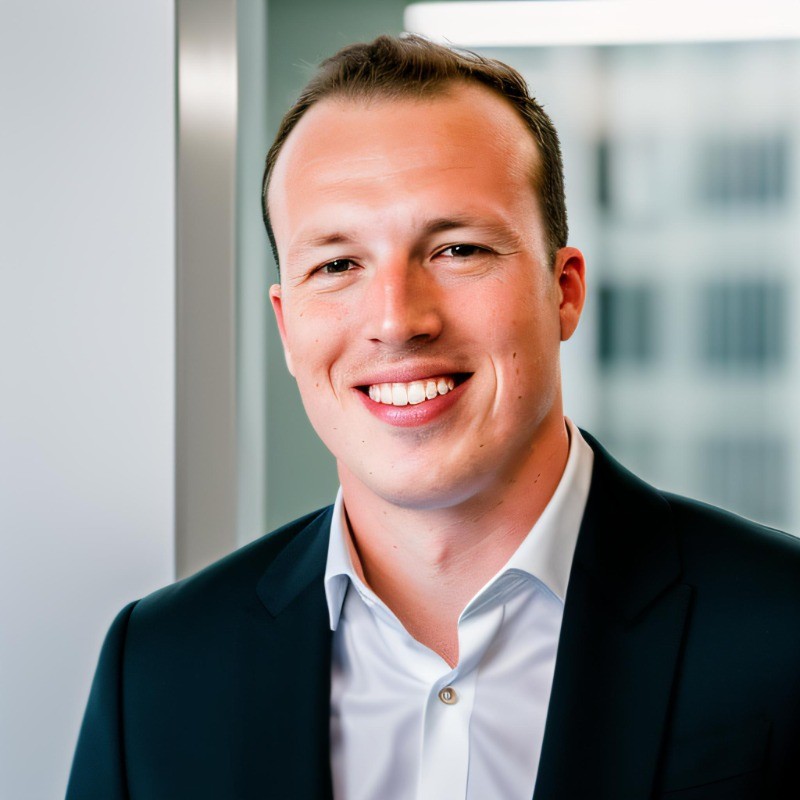
I’ve spent my career building institutions and partnerships that helps connect talent to real opportunities. At Frontier, I’m doing the early work that makes everything else possible: building trust, finding believers, and helping a new institution earn its place.
I’ve spent my career close to a question that has never stopped pulling at me: who gets recognized early, who gets passed over, and what kinds of institutions actually expand what a person can become? That question is what brought me to Frontier.
Much of my career has run through the African Leadership Group ecosystem — working across partnerships, fundraising, strategy, and operations on some of the most ambitious talent development efforts in the world. That work deepened my conviction that the architecture of opportunity matters as much as the quality of the education itself.
At OnFrontiers, working with U.S. government agencies on enterprise SaaS for mission-critical environments, I learned how serious institutions evaluate trust and make decisions about new models. Co-founding FreshBox in Kenya taught me to respect speed, constraint, and the discipline of solving real problems for real people before the proof exists on paper.
Earlier work at Komaza and in maternal and child health research gave me a lasting respect for operational detail and the hard truth that good intentions achieve nothing without execution. Every role has reinforced the same lesson: what you build matters far less than whether it actually holds up for the people depending on it.
What I do best is help good ideas find their footing early — through clarity, instinct, and a genuine curiosity about people. Most good work starts the same way most good relationships do: with a conversation that goes a little longer than planned.
At Frontier, I get to bring that to bear at a moment when it genuinely counts — helping build the trust, partnerships, and early foundation that give a new kind of institution the credibility to become real.
BUILDING AT FRONTIER
→ Building the trust, relationships, and early partnerships that give Frontier its foundation
→ Working with funders, employers, civic leaders, and university partners to make Frontier clear, credible, and worth backing
→ Shaping the story of an institution that needs to feel both ambitious and grounded
◎ Currently obsessed with: what kind of institution would have genuinely stretched me, sharpened my judgment, and changed my sense of what was possible — when I was coming up.

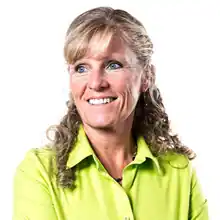
I’ve spent two decades inside the most ambitious competency-based programs in the country — serving more than 200,000 students — and emerged with one clear conviction: we know how to measure seat time, but not readiness. At Frontier, I’m changing the unit of measure.
I’ve spent my career at the intersection of learning design and human potential — asking not just what we teach, but whether what we teach prepares people for the world ahead. That question never left me. It’s what brought me to Frontier.
At WGU and SNHU, I worked at a scale most educators never encounter — 150,000 to 200,000 students — building competency-based models where learners had to demonstrate real capability, not just complete coursework. As VP of Strategy for Product and Program Innovation at SNHU, I translated that vision from theory into operational reality: aligning curriculum, assessment, and faculty practice to outcomes that transferred directly to the workplace.
I also pushed hard on what ‘ready’ means in practice. That meant raising the bar for authentic learning — real tools, real contexts, real stakes — and making sure faculty, mentors, and assessors were equipped to hold that standard.
Access has always been woven into how I approach this work. From Grace Hopper and Women in Cybersecurity to serving as VP of TechGirlz, I’ve worked to open pathways for people the system consistently underestimates. Many of those middle school girls came back — to college, and eventually as mentors.
What people often get wrong about me is that they see the systems work and assume I’m driven by structure. What I’m driven by is who gets left behind when we don’t build better ones. That’s the lens I bring to Frontier every day.
Technology is accelerating the pace of change faster than traditional education has ever moved. Defining what capability means in that environment — and building the systems to develop and prove it — is the work Frontier was created to do. And there’s nowhere I’d rather be doing it.
BUILDING AT FRONTIER
→ Defining what capability actually means — and making it measurable, teachable, and provable
→ Building the curriculum and assessment frameworks that translate learning into demonstrated readiness
→ Partnering with faculty, mentors, and industry assessors to close the gap between what students learn and what the world needs.
◎ Currently obsessed with: how to build a learning system that produces real readiness — and gives every student the evidence to prove it.


